
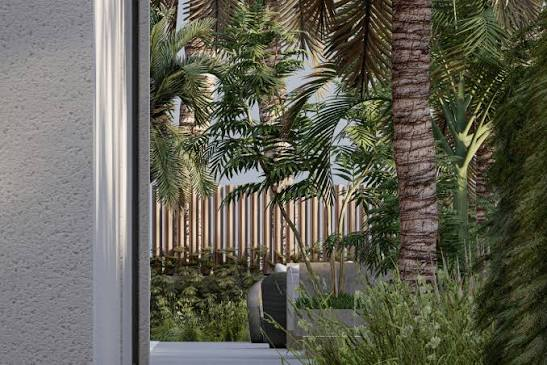
Dubai gardens used to be designed to impress from the glass doors: a large lawn, symmetrical palms, an oversized pool and enough open space to make the villa plot feel even bigger.
Now the more interesting gardens are doing almost the opposite.
Instead of one landscape designed to be seen all at once, homeowners are creating smaller outdoor rooms that reveal themselves gradually: a shaded breakfast corner, a sunken fire lounge, a private poolside seat or an outdoor dining space enclosed by planting.
For homeowners exploring landscape ideas for Dubai homes and villas, this shift is less about following a design trend and more about making expensive outdoor square meters genuinely useful.
The Problem With Designing the Entire Garden as One View
A showcase garden often starts with the question: What should people see when they look outside?
A garden room starts with a better question: What should people experience when they sit here?
That difference changes the entire layout.
Large uninterrupted lawns and open paved terraces photograph beautifully, but they can leave seating exposed to sun, surrounding villas, and long sightlines. Furniture then gets pushed against boundary walls or the house simply because there is nowhere else that feels naturally comfortable.
Garden rooms introduce enclosure without necessarily adding walls.
A change in paving, a tree canopy, a pergola, raised planter or low hedge can tell the eye that one part of the garden has ended, and another has begun.
The result feels smaller on plan but often larger in experience because there is more to discover.
A Garden Room Does Not Need Four Walls
The word “room” can be misleading.
In landscape design, enclosure can be surprisingly subtle.
A dining zone might need only a pergola overhead and planting behind the chairs. A reading corner could be defined by one specimen tree, a bench and a change in ground material. A fire lounge can sit slightly below the surrounding garden so the change in level creates privacy naturally.
Think of outdoor rooms as having four possible boundaries:
Floor: paving, gravel, decking or lawn
Ceiling: tree canopy, pergola or open sky
Walls: planting, screens, hedges or architectural structures
Threshold: steps, pathways or changes in material
Not every room needs all four. Usually, two or three are enough to make a space feel intentional.
Privacy Is Becoming More About Sightlines Than Tall Walls
Villa gardens in Dubai often sit surprisingly close to neighboring properties.
The instinctive response is to add tall screening around the entire boundary. But this can make the garden feel boxed in and may still fail to protect the places where people actually sit.
A more precise solution is to study sightlines from each activity zone.
If neighboring windows overlook one dining table, screening that particular angle may solve the problem without surrounding the whole garden with dense foliage.
A small tree canopy can interrupt an upper-floor view. Layered planting behind a lounge can make the seating feel enclosed. A strategically positioned pergola can provide both shade and overhead privacy.
This targeted approach uses less material while making the garden feel more private where privacy actually matters.
Shade Should Follow Activity, Not Geometry
A pergola centered perfectly within a rectangular garden may look balanced on a drawing.
That does not mean it shades the right place at 4:30 pm.
Outdoor rooms should be positioned according to when they will be used. A breakfast area has different solar exposure from an evening lounge. Poolside seating has different shade requirements from an outdoor kitchen where someone may stand beside a hot grill.
This is where good landscape Dubai planning moves beyond arranging attractive features on a plan.
Shade structures, trees and screens should respond to the activity underneath them rather than simply filling empty corners symmetrically.
Smaller Zones Can Improve Climate Comfort
Breaking a large garden into smaller spaces also creates opportunities to manage the immediate environment.
A broad paved terrace absorbs and releases heat across one continuous surface. A more layered garden can interrupt that exposure with planting pockets, shaded surfaces and tree cover.
The same principle applies to wind.
A completely exposed lounge may feel uncomfortable on breezy evenings, while planting or a partial screen can soften airflow around a seating area without closing it completely.
Water features can also be positioned where their sound is actually experienced rather than placed at the far end of the garden as decoration.
The objective is not to control the climate of the entire plot. It is to improve the few square meters where people spend their time.
Give Every Room a Different Reason to Exist
Dividing a garden into multiple zones only works when those zones have distinct purposes.
Creating three seating arrangements with slightly different furniture does not create three garden rooms.
A stronger plan might include:
| Outdoor Room | Primary Purpose | Detail That Defines It |
|---|---|---|
| Morning courtyard | Coffee and breakfast | Filtered morning shade |
| Pool lounge | Dry relaxation beside water | Deep seating and privacy planting |
| Dining terrace | Family meals and entertaining | Outdoor kitchen nearby |
| Fire lounge | Evening conversation | Lower seating and controlled lighting |
| Quiet garden corner | Reading or solitude | Dense planting and minimal circulation |
Each room should offer something the others do not.
That is what encourages movement through the garden instead of concentrating every activity immediately outside the villa doors.
Lighting Should Reveal Rooms Gradually
One floodlight can illuminate an entire garden. It can also flatten every layer that made the design interesting during daylight.
Garden rooms benefit from separate lighting scenes.
Dining requires usable light at table level.
Steps need safe illumination.
Planting can be selectively highlighted to create depth.
A fire lounge may need almost no decorative lighting once the flame is operating.
Keeping darker transitions between different zones can also make the garden feel deeper at night because everything is not visible simultaneously.
Good nighttime landscaping is therefore partly about deciding what not to illuminate.
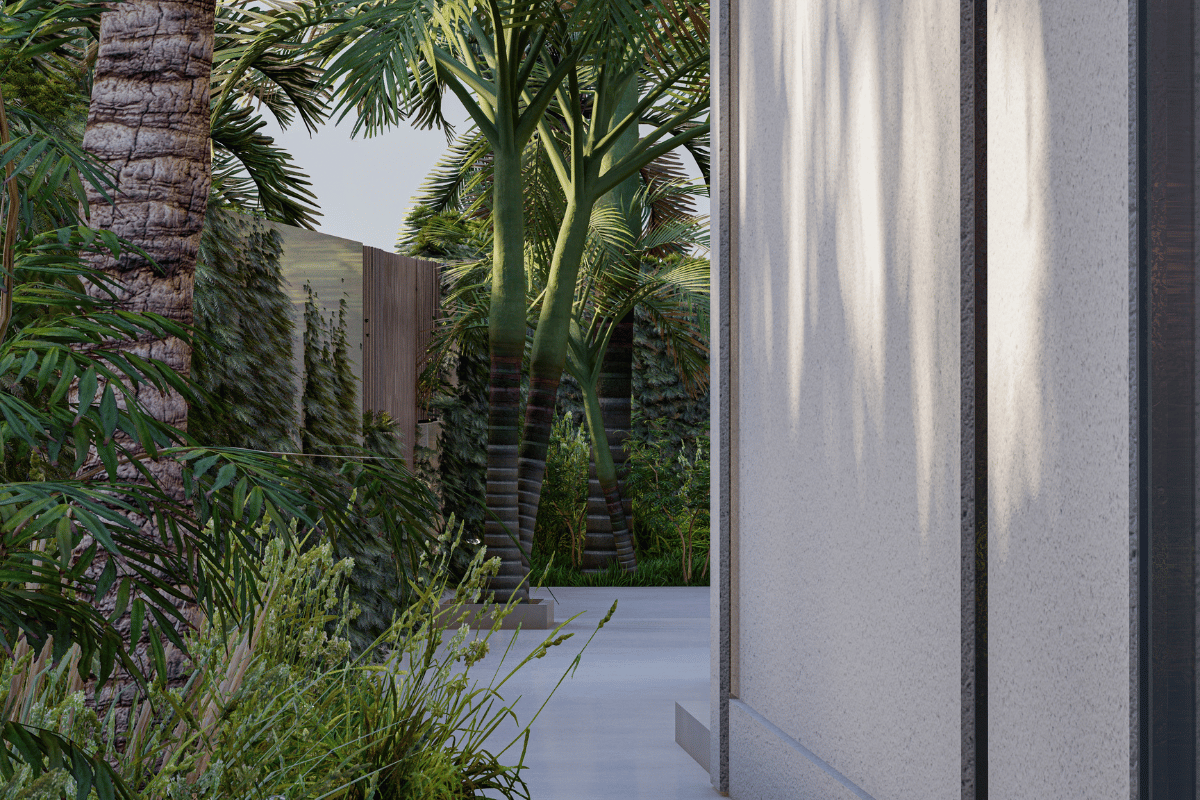
The New Luxury Is a Garden People Actually Occupy
A villa garden does not need to display every feature from a single viewpoint. Some of the strongest outdoor spaces deliberately hold something back.
You see planting before discovering the bench behind it.
A pathway turns before reaching the dining room.
The fire lounge sits slightly below the pool deck.
A quiet seat faces greenery rather than the villa.
This creates intimacy without sacrificing sophistication.
For homeowners reconsidering their landscape project in Dubai, the useful question is no longer how many features can fit into the garden. It is how many genuinely different experiences the garden can support.
Terrascapes approaches villa landscapes as complete outdoor environments, coordinating planting, pools, shade structures, firescapes, hardscape, lighting and custom living spaces so each area belongs to the same design while still having its own purpose.
The showcase garden was designed to be looked at. The garden room is designed to make you stay.
FAQs
-
It is a defined outdoor zone created for a particular activity using elements such as planting, paving, shade, levels or screens rather than conventional interior walls.
-
Not necessarily. Separating the garden into partially concealed zones can create greater visual depth because the entire space is not revealed at once.
-
Yes. Existing gardens can often be reorganized using planting, screens, pergolas, paving changes, lighting, and repositioned furniture without rebuilding every element.
-
There is no fixed number. Each zone should serve a genuine purpose rather than being created simply to fill space.